

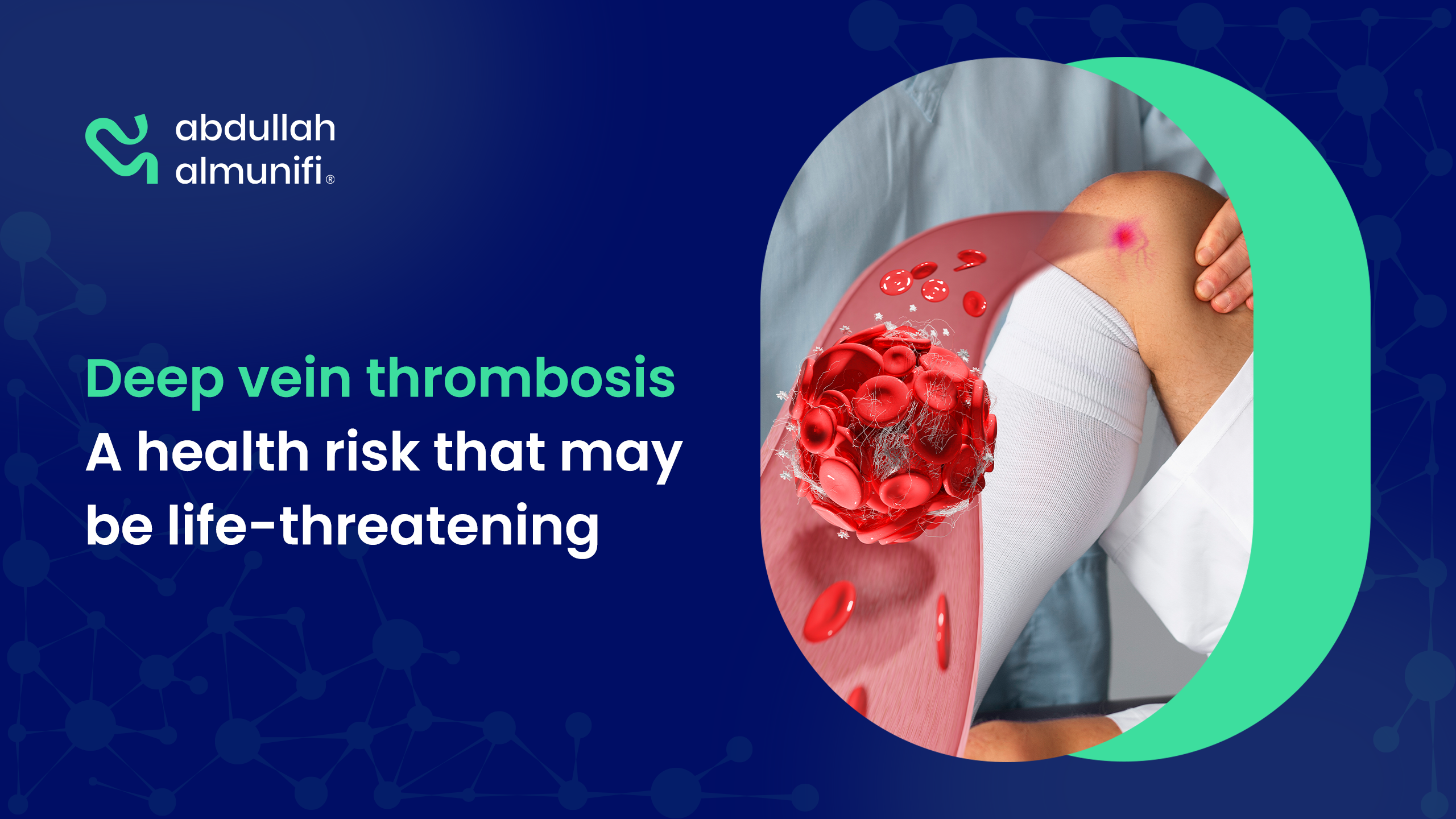
Deep Vein Thrombosis
Deep Vein Thrombosis (DVT) is a serious medical condition that occurs when a blood clot forms in the deep veins, often in the lower extremities such as the legs. This clot can partially or completely block blood flow, leading to serious health complications, most notably pulmonary embolism (PE), a life-threatening emergency if the clot travels to the lungs. According to statistics from the World Health Organization (WHO), DVT is one of the leading causes of cardiovascular-related deaths worldwide.
Studies indicate that the prevalence of DVT is increasing, especially with the high rates of obesity and lack of physical activity in modern societies. Obesity, in particular, is a major risk factor due to the mechanical pressure it puts on the veins, which impedes blood flow and increases the likelihood of clot formation. In addition, other factors such as prolonged sitting, smoking, pregnancy, and the use of certain medications play a major role in increasing the risk of infection.
In this article, we will discuss in detail the physiological mechanisms that lead to clot formation, factors that increase the risk of developing DVT, and the most important evidence-based scientific strategies for preventing DVT. We will focus in particular on the role of obesity as a risk factor and how to manage it to reduce the likelihood of developing this serious condition.
1. Mechanism of Deep Vein Thrombosis:
DVT occurs due to multiple factors known as Virchow's Triad, which are:
- Blood stasis (stasis): such as sitting for long periods or immobility.
- Damage to the blood vessel wall: as a result of injury or surgery.
- Increased blood clotting ability (hypercoagulability): due to genetic factors or diseases such as cancer or obesity.
2. Main factors that increase the risk of DVT:
- Obesity: Obesity increases pressure on the veins in the pelvis and legs, which impedes blood flow and increases the risk of clotting.
- Lack of physical activity: Sitting or standing for long periods without moving causes blood stagnation.
- Smoking: Damages blood vessels and increases blood viscosity.
- Age: The risk increases after the age of 60.
- Pregnancy and childbirth: Pregnancy increases blood pressure in the veins and changes the balance of hormones.
- Medications: such as birth control pills or hormone replacement therapy.
- Chronic diseases: such as heart disease, cancer, and diabetes.
3. DVT prevention strategies:
A. Regular physical activity:
- Walking: Walking for 30 minutes a day improves blood circulation and reduces blood stagnation.
- Leg exercises: If you sit for long periods, do simple exercises such as raising your heels and toes to stimulate blood flow.
- Aerobic exercises: Such as swimming or cycling, which promote cardiovascular health.
B. Weight Management:
- Healthy diet: Reduce your intake of saturated fats and sugars, and increase your intake of fiber, vegetables, and fruits.
- Exercise: Helps you lose weight and reduce pressure on your veins.
- Consult a nutritionist: To design a diet plan that suits your health condition.
C. Hydration:
- Drink water: Dehydration increases blood viscosity, which increases the risk of clotting. It is recommended to drink 8-10 glasses of water daily.
- Avoid caffeine and alcohol: They can cause dehydration.
D. Wearing Compression Stockings:
- Benefits: Improves blood flow in the legs and reduces swelling.
- Types: Pressure levels vary, so you should consult a doctor to choose the appropriate type.
E. Avoiding Smoking:
- Smoking: Increases blood viscosity and damages blood vessel walls. Quitting smoking reduces the risk of DVT and heart disease.
F. Prevention While Traveling:
- Move your legs: If you are traveling long distances, move your legs every hour.
- Simple exercises: such as flexing and extending your ankles to improve blood circulation.
- Drink water: to avoid dehydration.
G. Preventive Medications:
- Blood thinners: such as heparin or warfarin, which your doctor may prescribe for people at high risk.
- Aspirin: In some cases, it may be recommended to reduce the risk of clotting.
4. Role of obesity in increasing the risk of DVT:
Obesity is a major risk factor for deep vein thrombosis (DVT). According to recent studies, people who are obese (BMI ≥ 30) are 2-3 times more likely to develop DVT than those of normal weight. This strong association between obesity and increased risk of clotting is due to several complex physiological mechanisms, which we discuss in detail below:
A. Mechanical pressure on the veins:
Excess weight puts mechanical pressure on the veins in the pelvis and legs, which impedes normal blood flow. This pressure leads to:
- Venous stasis: When blood flow slows in the veins, the chance of clots forming increases.
- Venous dilation: Constant pressure on the veins can cause them to expand, increasing the risk of blood pooling and clot formation.
B. Chronic inflammation:
Obesity is associated with a state of chronic inflammation in the body, where fat cells (adipocytes) secrete large amounts of pro-inflammatory cytokines such as:
- Interleukin-6 (IL-6): increases the production of clotting factors in the liver.
- Tumor necrosis factor alpha (TNF-α): enhances the adhesion of platelets to the walls of blood vessels.
- C-reactive protein (CRP): is associated with an increased risk of clotting by promoting inflammation.
These chronic inflammations lead to changes in the walls of blood vessels and increase the blood's ability to clot (hypercoagulability), which increases the risk of DVT.
C. Metabolic disorders:
Obesity is associated with several metabolic disorders that increase the risk of clotting, including:
- Insulin resistance: leads to increased insulin secretion into the blood, which stimulates the production of clotting factors such as tissue factor and reduces the production of natural anticoagulants such as protein C.
- Metabolic syndrome: includes high blood pressure, high blood sugar, and high triglycerides, all of which increase the risk of clotting.
- Increased secretion of leptin: a hormone secreted by adipose tissue and associated with increased platelet adhesion and clot formation.
D. Lack of physical activity:
People who are obese often suffer from lack of physical activity due to difficulty moving or joint pain. Lack of movement leads to:
- Blood stagnation in the lower extremities: especially when sitting or standing for long periods.
- Decreased efficiency of blood circulation: which increases the risk of blood clots.
R. Hormonal changes:
Obesity affects the hormonal balance in the body, which may increase the risk of clotting. For example:
- Increased estrogen secretion: especially in cases of central obesity (accumulation of fat around the abdomen), as estrogen increases the production of clotting factors.
- Thyroid hormone imbalance: which can affect blood viscosity.
G. Obesity-related complications:
Obesity increases the risk of other conditions that are risk factors for DVT, such as:
- Sleep apnea: which is associated with low blood oxygen levels and an increased risk of clotting.
- Cardiovascular diseases: such as heart failure, which increases blood stagnation in the veins.
5. Preventing DVT in People with Obesity:
Fortunately, the risk of DVT in people with obesity can be reduced by:
- Losing weight: Even losing 5-10% of your weight can improve blood flow and reduce inflammation.
- Increasing physical activity: Such as walking or swimming to improve circulation.
- Wearing compression stockings: To support blood flow in the legs.
- Managing chronic conditions: Such as diabetes and high blood pressure.
- Consulting a doctor: To assess the need for anticoagulant medications in high-risk cases.
6. When should you see a doctor?
If you experience the following symptoms, you should seek medical attention immediately:
- Sudden leg swelling.
- Increase physical activity: such as walking or swimming to improve blood circulation.
- Pain or cramping in the leg muscles.
- Redness or warmth of the skin around the affected area.
- Shortness of breath or chest pain (signs of pulmonary embolism).
Deep vein thrombosis (DVT) is a serious medical condition that can lead to life-threatening complications if not treated properly. Although obesity is a major risk factor, there are many other factors that contribute to an increased risk, such as physical inactivity, prolonged sitting, smoking, and chronic illnesses. Therefore, preventing DVT requires a multifaceted approach that includes lifestyle changes, chronic disease management, and awareness of early symptoms.
By maintaining physical activity, drinking adequate amounts of water, and following a healthy diet, the risk of developing DVT can be significantly reduced. Additionally, people at high risk, such as those who are obese or have undergone major surgery, should consult a physician to assess the need for additional preventive interventions such as anticoagulant medications or compression stockings. Preventing DVT is not only an individual responsibility; it also requires community efforts to raise awareness of the importance of movement and physical activity, especially in light of modern sedentary lifestyles. By following these guidelines, we can reduce the burden of DVT and improve vascular health at the individual and community levels.